


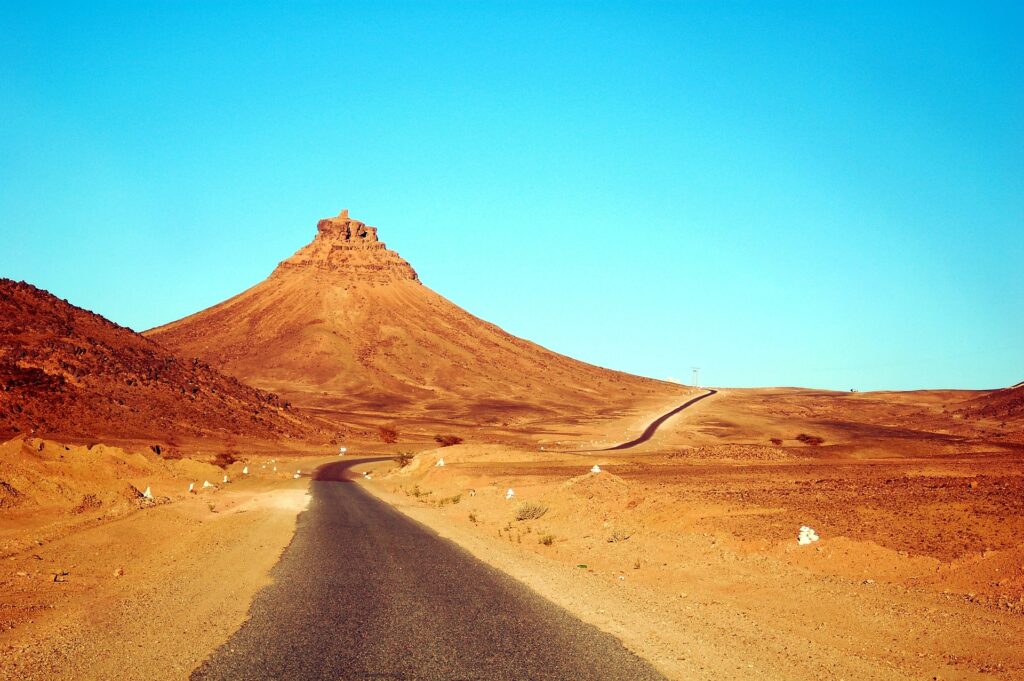
The Atlas Mountains stretch for 1,600 miles through Morocco, Algeria and Tunisia. They have some of the most beautiful scenery North Africa has to offer These mountains are the natural border between the Mediterranean and Atlantic coasts and the Sahara Desert. Thousands of tourists come here every year to hike, take in the magnificent scenery or go mountain biking and rock climbing. In winter, you can also ski in the Atlas Mountains in Morocco. The mountains are the traditional hometown of the Atlas Berbers and are also rich in culture and history. Discover with us what to do and see in these fantastic mountains!
Geography of the Atlas Mountains
The Atlas Mountains as we know them today were formed during the Paleogene and Neogene periods between 66 and 1.8 million years ago, when the continents of Europe and Africa collided. This turbulent period is also the cause of the formation of the European Alps and the Pyrenees. The Atlas Mountains can be divided into six different sub-ranges.


Anti-Atlas
Anti-Atlas is the westernmost mountain range, extending from the Atlantic Ocean to the northeast for about 310 miles, reaching Ouarzazate and Tafilalt, the largest oasis in Morocco. The southern part of the anti-atlas is the Sahara desert. This area of the Atlas Mountains is defined by its arid and rocky landscape and stunning rock formations, dotted with verdant oases and natural pools. It is found entirely in Morocco.
High Atlas
The High Atlas is the most famous and the most visited of the Atlas sub-range. It is also entirely Moroccan, rises to the west near the Atlantic Ocean and extends eastwards to the border with Algeria. The High Atlas includes the highest peaks in the range, including Jebel Toubkal. With a total height of 13,671 feet, Jebel Toubkal is the tallest mountain in North Africa and a favorite destination for experienced climbers.
Middle Atlas
The Central Atlas is the northernmost area of the country and the second highest area. It is defined as a hot and humid climate. The dense cedar forest offers shelter to a variety of unique flora and fauna. These forests make the Central Map a sub-region with the richest biodiversity and are also the best destination for lovers of wildlife and birdwatchers. This is also a useful option for inexperienced hikers.
Tell atlas
The only sub-range that covers all three countries, the Tell Atlas stretches 930 miles across Morocco, Algeria and Tunisia. It runs parallel to the Mediterranean coast and provides a clear geographical boundary between the mild Mediterranean climate and the hot, dry climate of the Sahara Desert. Several large cities, including Algiers, the capital of Algeria, lie at the foot of the Tell Atlas.
Atlas of the Sahara desert and mineral mountains
The Sahara Atlas is mainly distributed in Algeria, although its eastern end extends to Tunisia. This subgroup marks the northern boundary of the Sahara Desert. The mineral mountains are connected to the Atlas of the Sahara Desert in the west, forming the easternmost point of the Atlas Mountains. They crossed Algeria and Tunisia, famous for their particularly rugged terrain and one of the underdeveloped areas of the Maghreb.


The best time to go and the weather
The Atlas Mountains are a year-round destination and the travel peak depends on the exact destination and activities selected. Traditionally, the best time for hiking, mountain biking and rock climbing is spring or autumn, when the weather is neither too hot nor too cold and rainfall is scarce.
For those traveling to the Central Asian Atlas, rainfall is a special consideration. Experienced mountaineers are looking for new challenges, they will appreciate the prospect of melting snow and ice in winter to increase climbing skills and the prospect of climbing the peaks of the High Atlas in mid-winter. Of course, if you want a unique experience of skiing in Africa, winter is the only time to travel. Anytime, anywhere, make sure you bring enough clothes and protect yourself from these factors.
What to do
Trekking
Among these wonderful mountains is certainly not an experience not to be missed, these mountains are perfect for trekking and enjoying the landscape. Toubkal trek 2 days is one of the best options if you want to enjoy the suggestive landscape.
Hiking
It’s the main reason most people travel to the Atlas Mountains and the High Atlas is usually their sub-range of choice. There are several peaks over 13,000 feet in the High Atlas, including the three highest mountains in North Africa.
For a more relaxed approach, consider hiking through the Dades and Todra Gorges. Located between the High Atlas and Anti Atlas near the town of Tinghir, these gorges boast stunning red cliffs and rock formations and groves of olive, palm and almond trees fed by the rivers that give them their name. There are hundreds of hiking trails of varying lengths, one of the most rewarding being the three-day hike between the two gorges.