


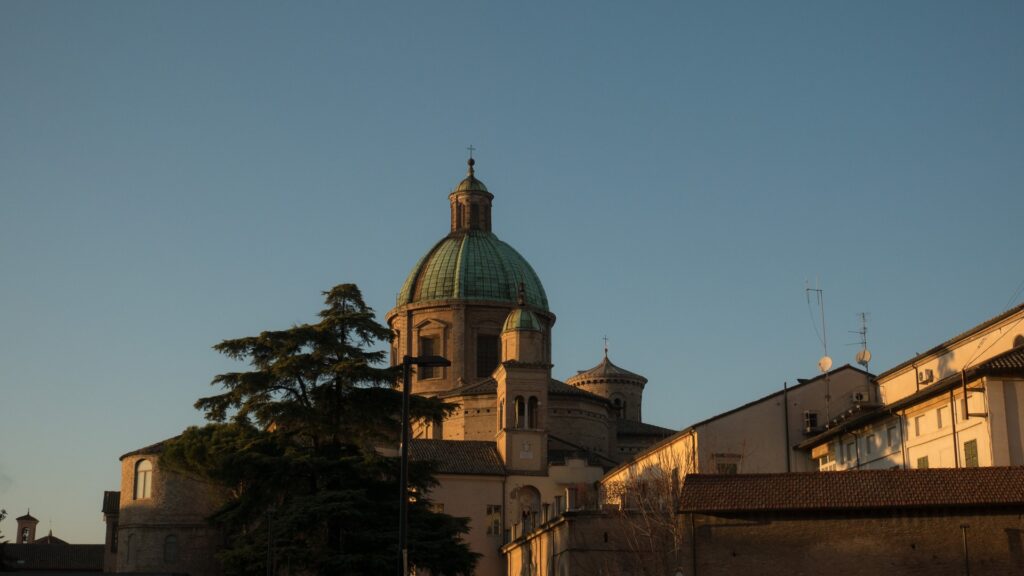
Ravenna is a beautiful provincial city with a relaxed atmosphere, but surprisingly full of places to visit, unique of its kind. Ravenna has in fact an artistic heritage of inestimable value, so much so that it has 8 city sites included in the UNESCO heritage, a unique record for a city of only 180,000 people.
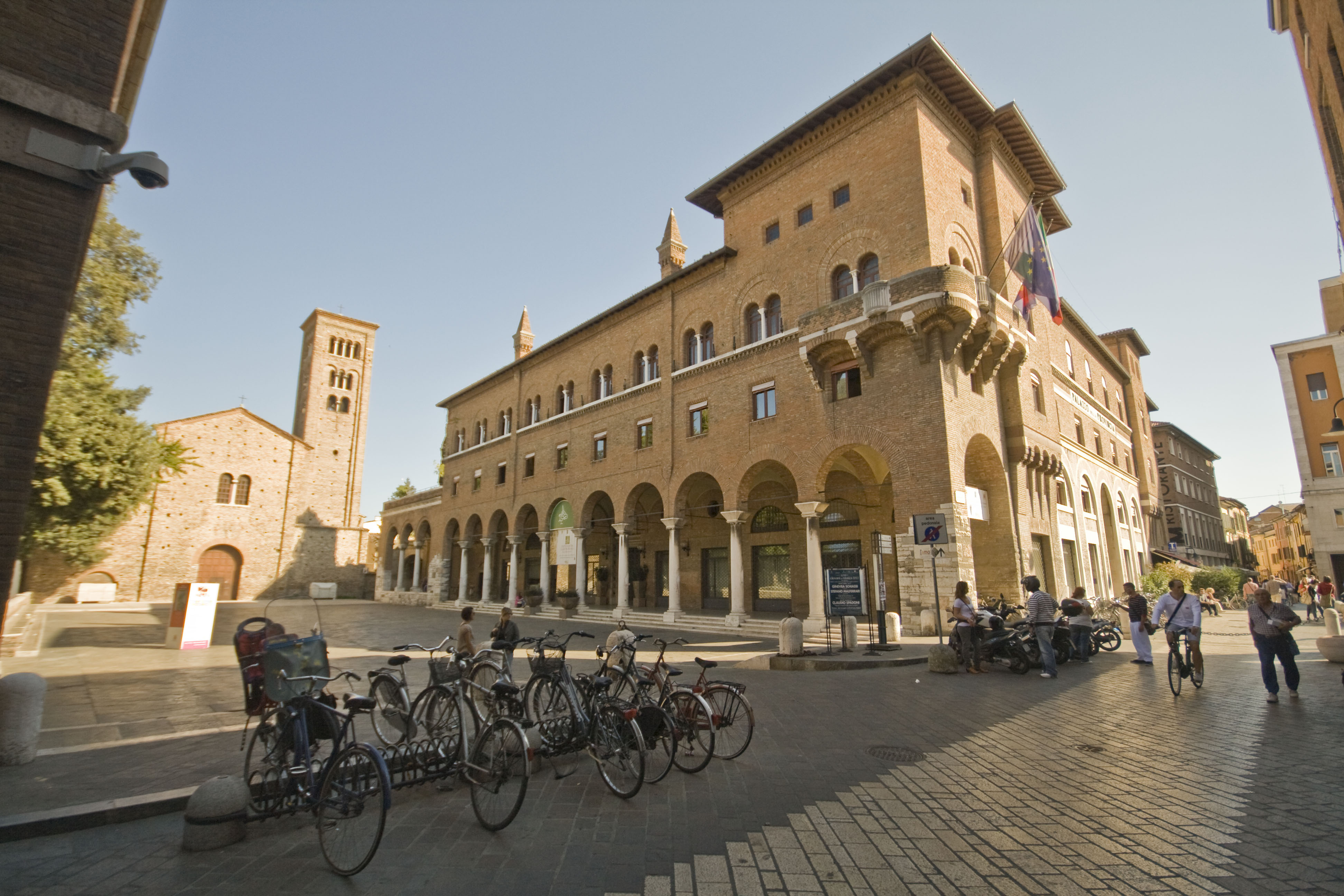

The main reason to visit Ravenna are the mosaics of the early Christian age, a period ranging from the third to the sixth century, during which the Roman Empire suffered a series of barbarian invasions that ended up dividing the possessions of Rome into the Western Roman Empire and in that of the East.
During this period Ravenna for a series of strategic reasons became the capital first of the Western Roman Empire, then of the Ostrogothic Kingdom of Theodoric, and finally the new capital of a newborn “Esarcato”, under the leadership of Giustiniano.
Ravenna becomes a city that winks at the sumptuous Constantinople (modern Istambul) and knows a period of splendor that has been handed down to the present day, with many monuments that have been excellently preserved and which constitute a unique heritage in Italy and in the world as evidence of a glorious era.
If you are in Italy then you absolutely cannot miss one of the gems of Roman-Byzantine art.
Depart from the Basilica of San Vitale where you can admire the mosaics depicting Giustiniano, his wife Teodora and the bishop Massimiano. As soon as you are outside, visit the Mausoleum of Galla Placidia, in the morning there are fewer people and you can admire the blue and blue vaults, which envelop visitors in a starry sky, one of the most evocative monuments. Another must-see even if less known stop is the Arian Baptistery open from Monday to Friday only in the morning, while on Saturdays and Sundays it is also open in the afternoon. Not included in the Unesco sites, but interesting is the Domus Tappeti dei Pietra, a private villa whose mosaics are in good condition and really rare beautiful.
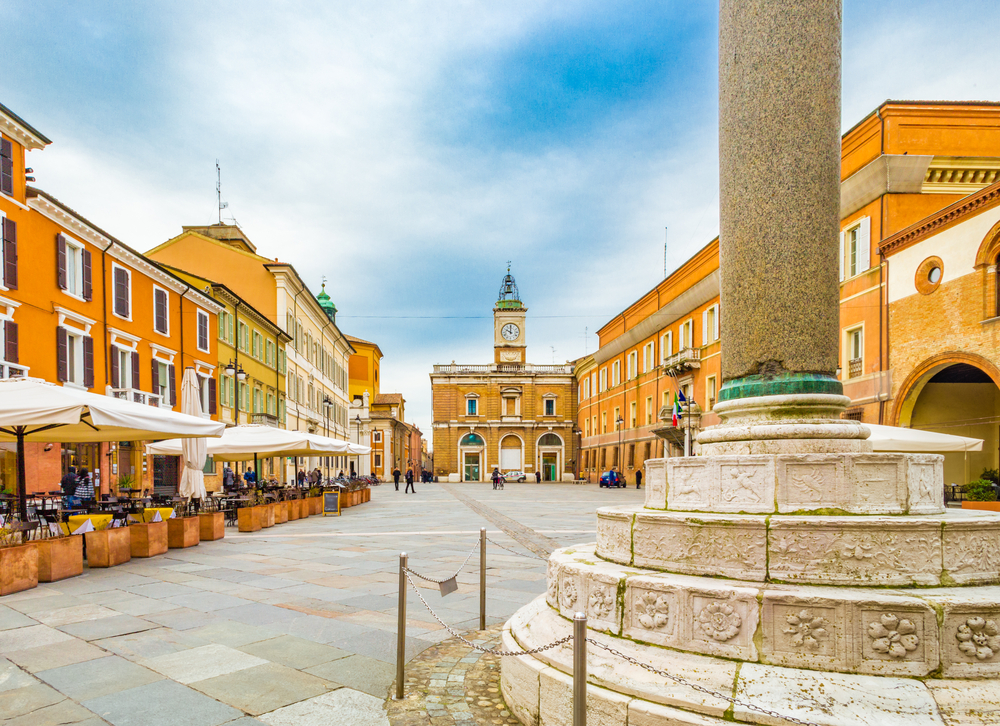

Another monument not to be missed is the basilica of Sant’Apollinare Nuovo, whose mosaics represent moments of life of the time, depicting the ancient port and the palace of Theodoric, although partially remodeled at a later time.
In a different area of the city, but within walking distance, there are the Neonian Baptistery, the Archbishop’s Chapel and the Cathedral of the Resurrection. Above all, the Archbishop’s chapel is another milestone of early Christian art and a monument not to be missed.
A place with a lower artistic value, but certainly interesting because full of history is the Tomb of Dante, father of the Italian language, which houses the bones of the poet adventurously saved from multiple attempts of theft.
If you have more time, take your car and head towards the Mausoleum of Theodoric and then move towards Sant’Apollinare in Classe which is about 8 kilometers away, with a possible visit to the archaeological park and museum, before returning home. Read more about Ravenna in the article Visit Ravenna, its mosaics and eight UNESCO sites in one or more days , full of information and that you can easily translate with google (because it is written in Italian)