


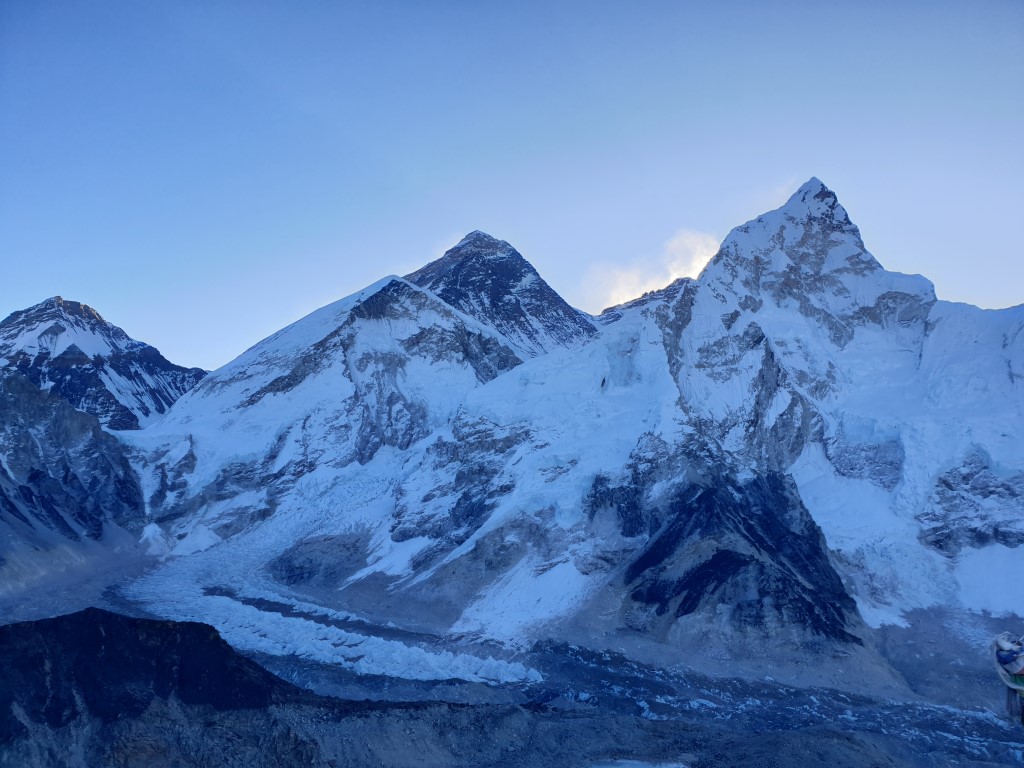
Mount Everest, the towering pinnacle that straddles the borders of Nepal and Tibet, China, has long captured the imagination of adventurers and mountaineers worldwide.
From its first historic ascent by Sir Edmund Hillary and Tenzing Norgay Sherpa in 1953 to the more than 11,346 subsequent summits as of July 2022, Mount Everest continues to be a symbol of human determination and the allure of conquering nature’s challenges.
In this comprehensive guide, we delve into captivating Mount Everest facts, shedding light on its name origins, growing stature, extreme weather conditions, high-altitude challenges, and the remarkable flora and fauna that endure in this harsh environment.
The Origins of the Name
Mount Everest, famously known as the world’s tallest peak, was bestowed with its moniker in honor of George Everest, the Surveyor General of British India, in 1865.
The mountain’s Nepali name, “Sagarmatha,” meaning “Goddess of the Sky,” and its Tibetan name, “Chomolungma,” signifying “Goddess Mother of the World,” reflect the reverence and mystique associated with this awe-inspiring landmark.


A Growing Giant
Intriguingly, Mount Everest is not a static entity. Its height has evolved over time. Initially measured at 8,839.8 meters or 29,002 feet during a survey in 1865, subsequent measurements have indicated a consistent growth.
This continuous upward expansion culminated in a new official height of 8,848.86 meters or 29,031.69 feet, as jointly declared by Nepal and China on December 8, 2020.
Battling the Elements
Conquering Mount Everest is a monumental undertaking fraught with peril, largely due to its extreme weather conditions.
The mountain’s summit experiences temperatures as frigid as -62.2°C (-80°F), with average temperatures ranging from -25°C to -27°C (-13°F to -17°F) during prime climbing months.
The relentless jet stream, whipping at speeds exceeding 321.87 km/h (200 mph), presents an ongoing challenge, while avalanches and treacherous crevasses underscore the inherent dangers of the ascent.
The Unforgiving “Death Zone”
Ascending beyond 8,000 meters ushers climbers into the foreboding realm known as the “death zone.”
Oxygen levels here are so low that the human body struggles to function, leading to potentially life-threatening conditions such as brain swelling and high-altitude pulmonary edema (HAPE).
A High-Altitude Graveyard
Mount Everest’s imposing altitude, oxygen scarcity, and unpredictable weather conditions have contributed to a sobering death toll among climbers.
Over 310 fatalities have been recorded on the mountain, and many of these unfortunate souls remain eerily preserved due to the freezing temperatures.
Evacuating these bodies is a treacherous and expensive endeavor, often requiring experienced Sherpas to risk their lives. This grim reality has earned Everest the morbid reputation of a high-altitude graveyard.

Life’s Tenacity
Amidst the unforgiving terrain, life manages to thrive on Mount Everest’s upper reaches. While the lower elevations of Sagarmatha National Park host a diverse range of wildlife and vegetation, the mountain’s upper reaches also support life in unexpected ways.
The Himalayan Jumping Spider claims the title of the world’s highest-living animal, thriving up to 6,700 meters.
The bar-headed goose has been observed soaring to heights of up to 7,270 meters, with mountaineers often sharing anecdotes of spotting them glide above peaks adjacent to Mount Everest, some of which exceed 8,000 meters in elevation.
Closer to the ground, animals like Blue Sheep, Wild Yak, Pika, and Tibetan Gazelle persist at altitudes up to 6,100 meters. Additionally, hardy species of lichens and mosses brave the extreme conditions, underscoring life’s resilience in even the harshest environments.
Conclusion
Mount Everest serves as an enduring symbol of the unyielding human drive for exploration and resilience when confronted with the sternest tests posed by nature.
Its evolving elevation, formidable climatic conditions, and enigmatic high-altitude enigmas consistently captivate both intrepid adventurers and dedicated researchers.
Those venturing to the Everest Base Camp find themselves immersed in this legacy of fortitude, where the towering peak remains an irresistible muse for those willing to confront its challenges head-on.